
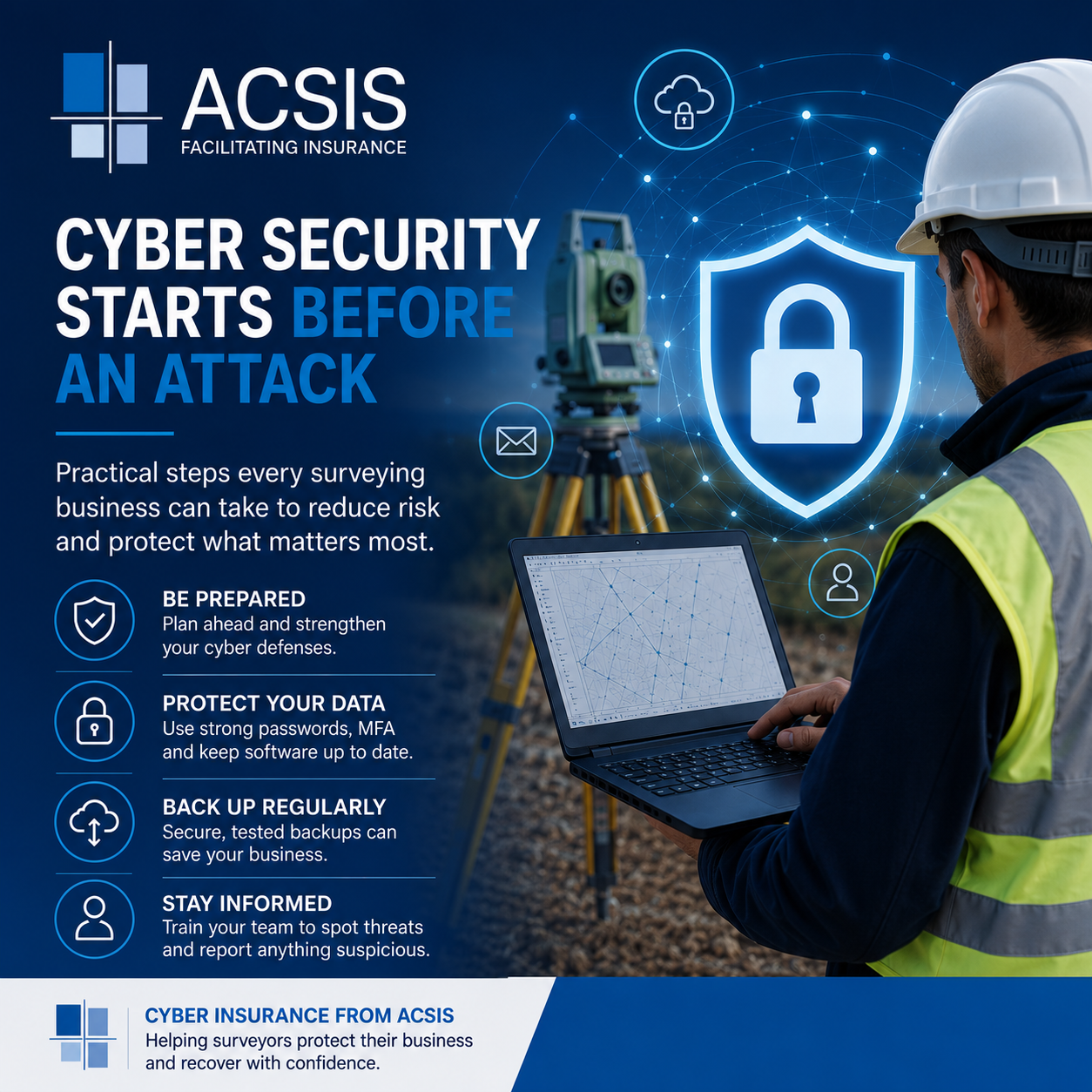
As surveying businesses continue to embrace digital technology, cyber security has become just as important as protecting physical equipment or maintaining professional standards.
From cloud-based project management and GNSS data to client records and financial information, surveyors now manage significant volumes of valuable digital data. Unfortunately, this also makes businesses an attractive target for cyber criminals.
The good news? Many cyber incidents can be prevented by adopting a few simple but effective security practices.
Why Surveying Businesses Are Increasingly at Risk
Modern surveying relies heavily on connected technology. Offices and field teams regularly exchange information using email, cloud storage, remote access platforms and specialised software.
If these systems are compromised, the consequences can include:
- Business interruption
- Loss or theft of sensitive client information
- Financial loss through fraud or ransomware
- Damage to your professional reputation
- Potential legal and regulatory obligations following a data breach
Cyber criminals often target small and medium-sized businesses because they may have fewer security measures in place than larger organisations.
Five Ways to Reduce Your Cyber Risk
1. Use Multi-Factor Authentication (MFA)
Passwords alone are no longer enough.
Enabling Multi-Factor Authentication adds an additional layer of security by requiring a second form of verification before someone can access your accounts.
This simple step can significantly reduce the likelihood of unauthorised access.
2. Keep Software Up to Date
Software updates often contain critical security patches designed to fix newly discovered vulnerabilities.
Regularly updating your:
- Operating systems
- Surveying software
- Accounting platforms
- Web browsers
- Mobile devices
helps reduce opportunities for cyber criminals to exploit known weaknesses.
3. Train Your Team to Spot Phishing Emails
Many cyber attacks begin with a convincing email.
Staff should be encouraged to:
- Verify unexpected payment requests
- Be cautious when opening attachments
- Check email addresses carefully
- Avoid clicking suspicious links
- Report anything unusual immediately
Creating a culture of cyber awareness is one of the most effective defences available.
4. Back Up Important Data
Regular backups can dramatically reduce downtime if your business experiences a ransomware attack or hardware failure.
Where possible:
- Maintain multiple backups
- Store at least one backup offline or in a secure cloud environment
- Test your backups regularly to ensure they can be restored successfully
Remember—backing up your data is only useful if you can recover it when you need it.
5. Review Your Cyber Insurance
Even businesses with strong cyber security measures can experience an incident.
Cyber Insurance may help provide financial protection and access to specialist support following events such as:
- Data breaches
- Ransomware attacks
- Business interruption
- Cyber extortion
- Privacy liability claims
- Incident response services
Having appropriate cover can help your business recover more quickly while reducing the financial impact of an attack.
Prevention Is Always Better Than Recovery
No organisation is immune to cyber threats, but taking proactive steps today can significantly reduce your risk tomorrow.
Combining strong cyber security practices with appropriate insurance protection helps build resilience and allows your business to focus on delivering professional services with confidence.
At ACSIS, we understand the unique risks faced by surveying professionals. Whether you’re reviewing your cyber risk management or exploring Cyber Insurance options, our team is here to help you protect your business.