
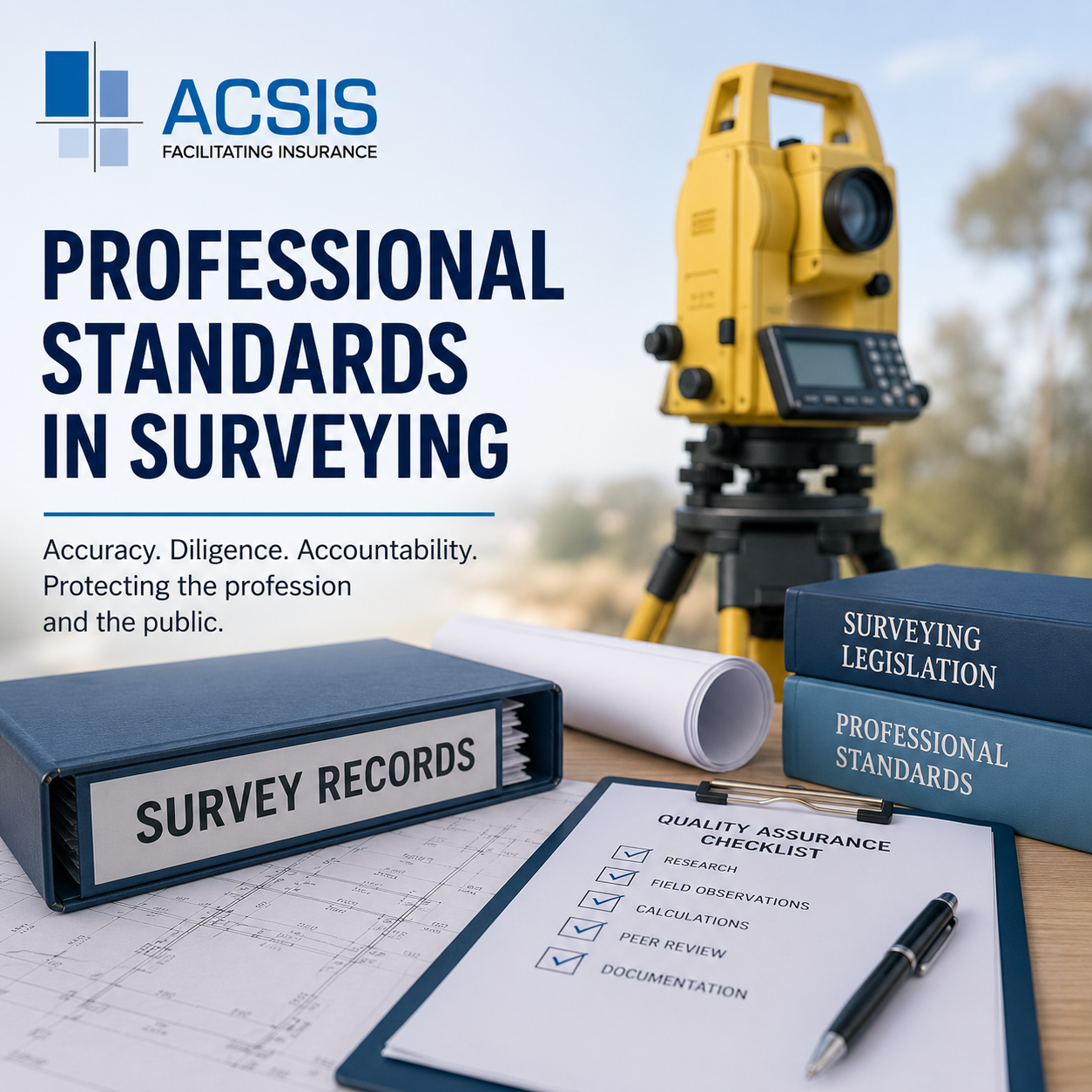
Professional standards exist to protect the public, uphold confidence in the surveying profession and support practitioners in delivering accurate, reliable work. While the vast majority of surveyors perform their duties to a high standard, disciplinary decisions provide valuable learning opportunities for the profession.
One recent case considered by a surveying registration board involved a registered land surveyor who incorrectly re-established and marked a property’s eastern boundary. The investigation found that the boundary location was more than six metres from its correct position, resulting in significant consequences for the property owner. The Board determined that the surveyor had failed to exercise the level of professional care expected of a registered practitioner and found breaches of the relevant surveying legislation.
Why Boundary Re-establishment Matters
Boundary surveys are among the highest-risk services undertaken by cadastral surveyors. Property owners, developers, councils and legal professionals rely on survey marks and plans to make important decisions involving ownership, construction and land use.
An incorrect boundary determination can lead to:
- Costly disputes between neighbouring landowners
- Delays to development projects
- Expensive rectification work
- Damage to professional reputation
- Potential disciplinary action
- Professional indemnity insurance claims
Even where an error is unintentional, the financial and legal consequences can be substantial.
Lessons for Surveying Professionals
Every disciplinary decision reinforces the importance of maintaining robust professional practices. Surveyors can reduce their exposure to risk by:
- Thoroughly reviewing historical survey evidence before re-establishing boundaries.
- Ensuring calculations and field observations are independently checked where appropriate.
- Maintaining comprehensive field notes and documentation to support professional decisions.
- Seeking peer review when dealing with complex or uncertain boundary evidence.
- Remaining up to date with legislative requirements, Board guidelines and continuing professional development.
Strong quality assurance processes not only improve accuracy but also provide valuable evidence should a survey ever be questioned.
Professional Standards and Risk Management Go Hand in Hand
Professional Standards Schemes, continuing professional development and comprehensive Professional Indemnity Insurance all play an important role in supporting surveying professionals.
While insurance cannot prevent mistakes from occurring, it can help protect surveyors from the financial impact of allegations, legal costs and compensation claims arising from professional services. Combined with sound professional judgement and effective risk management, it forms an important part of protecting both practitioners and their clients.
Final Thoughts
No surveyor intends to make an error, but even experienced professionals can face complex situations where judgement is tested. Reviewing real disciplinary outcomes provides an opportunity for the profession to reflect on best practice, strengthen internal processes and continue delivering the high standard of service expected by clients and the community.
By learning from past cases, surveyors can help minimise future risk while maintaining the integrity and reputation of the profession.
Need confidence that your surveying business is protected?
ACSIS provides Professional Indemnity Insurance designed specifically for surveying professionals, backed by industry expertise and an understanding of the unique risks surveyors face every day.
Further Reading
The case discussed in this article has been summarised for educational purposes. If you would like to explore the broader discussion around professional standards, public protection and surveying practice, the following resources provide additional context:
- The Institution of Surveyors NSW – Vice-President’s Report (September 2025) – Includes commentary on professional standards, disciplinary matters and maintaining public confidence in the surveying profession.
- Surveying and Spatial Information Act 2002 (NSW)
Sections 12 and 13 set out the Board’s powers in relation to professional incompetence and professional misconduct by registered surveyors. - Board of Surveying and Spatial Information (BOSSI) – Discipline Case #304 Summary
Breaches of Sections 12 & 13 of the Surveying and Spatial Information Act 2002. This disciplinary summary outlines the investigation into the incorrect re-establishment of a property boundary and the Board’s findings regarding professional incompetence and professional misconduct.