
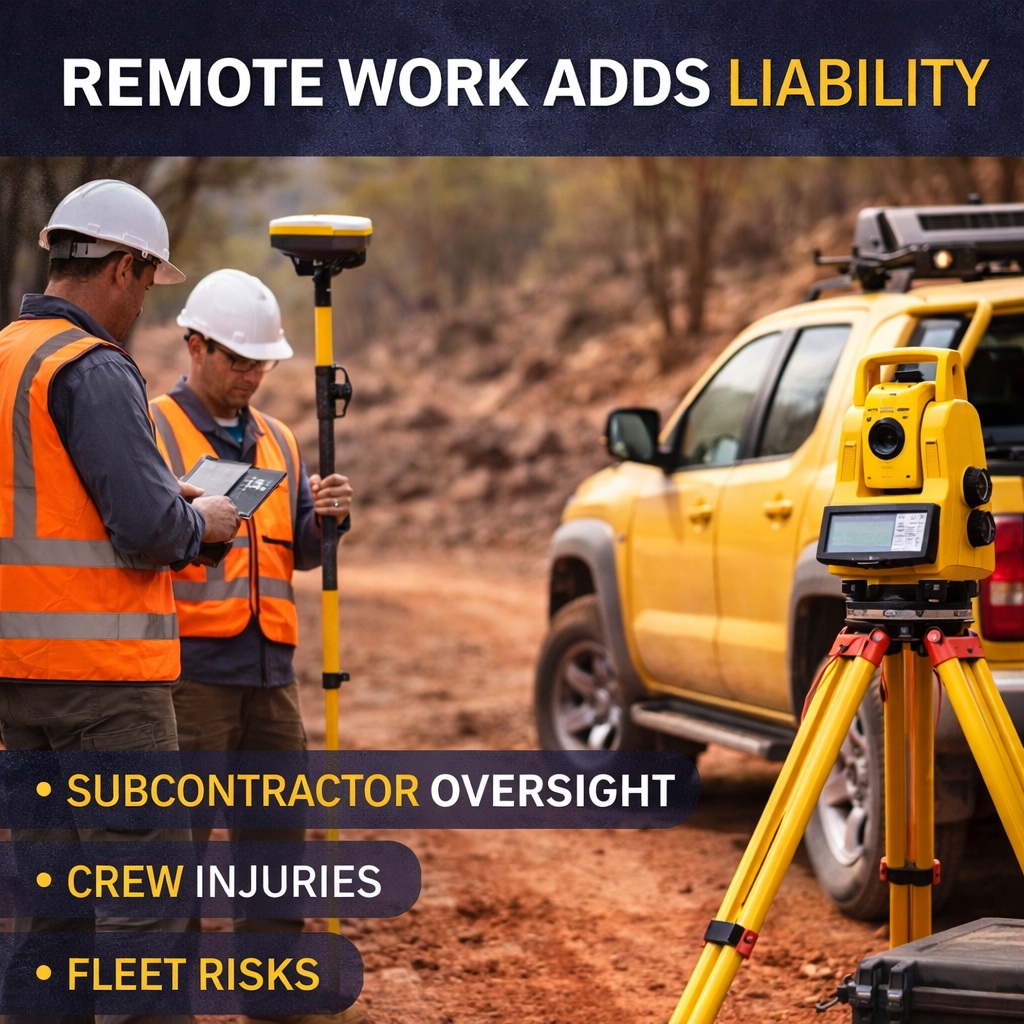
As surveying firms continue to take on projects in remote, regional, and high-risk environments, their exposure to liability is evolving just as quickly as the terrain they work in.
New insights from recent insurance reports highlight a clear trend: claims are increasing in situations where teams operate outside controlled environments. From isolated infrastructure projects to rugged construction zones, the risks are no longer just technical, they’re operational, logistical, and human.
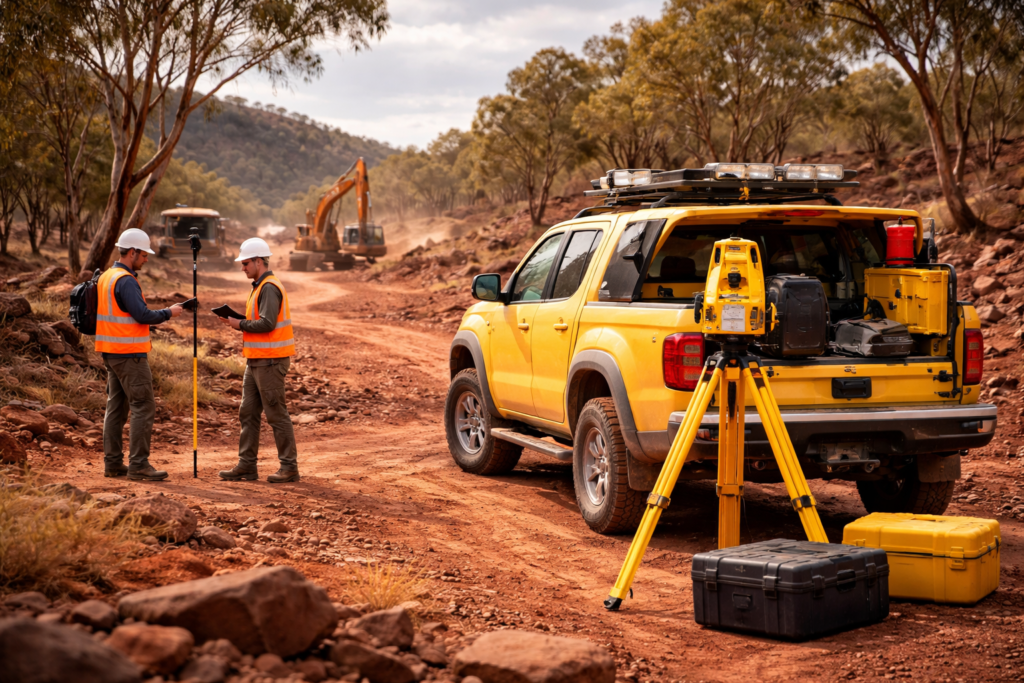
One of the biggest pressure points is subcontractor oversight. When projects rely on third parties in remote locations, visibility and control can drop significantly. This creates gaps in accountability, especially when something goes wrong and responsibility becomes blurred.
Field crew safety is another growing concern. Working in harsh, unpredictable conditions increases the likelihood of personal injury claims — particularly where fatigue, travel distances, and environmental hazards come into play. These incidents don’t just affect individuals; they can trigger broader liability issues for the firm.
Fleet-related incidents are also on the rise. Long-distance travel on unsealed roads, vehicle wear and tear, and limited access to immediate support all contribute to a higher frequency of claims. In many cases, it’s not just the vehicle at risk, but also the specialised equipment being transported.
That’s where integrated cover becomes critical.
ACSIS Fleet and Equipment policies are designed with these realities in mind — combining protection for vehicles, plant, and surveying equipment under one framework. This ensures that firms operating in remote and demanding environments aren’t left exposed by fragmented or outdated cover.
As Sophie Simpson, Senior Account Executive at ACSIS, explains:
“Surveyors are experts in terrain, but insurance coverage needs to match that reality. Remote work isn’t just a location shift, it’s a risk shift.”