
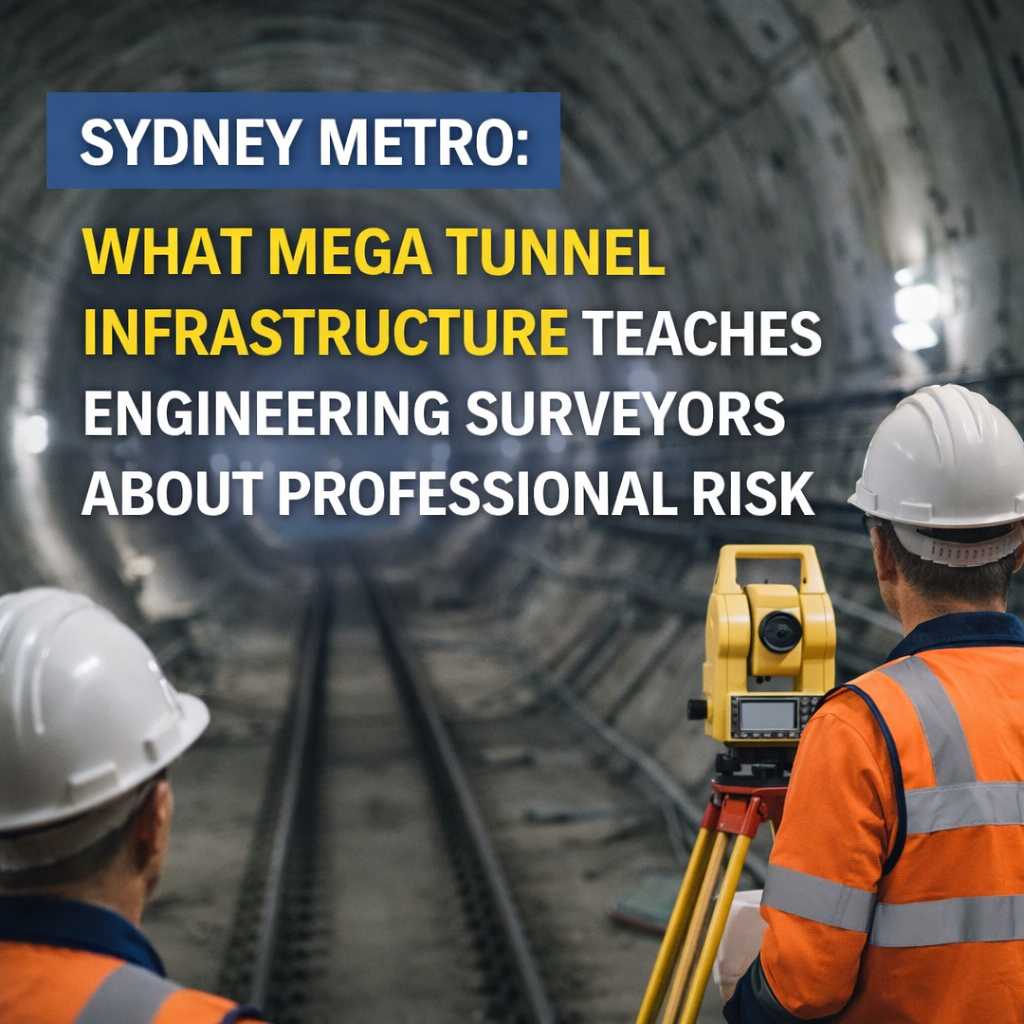
Introduction: Precision at Scale
Sydney Metro represents one of the most technically demanding infrastructure programs ever delivered in Australia. Underground rail alignment through dense urban corridors, complex station boxes, heritage proximity, and multi-contractor interfaces created a high-pressure environment where engineering surveyors operated within millimetre tolerances.
For engineering survey firms, projects of this scale highlight a critical reality:
Technical precision alone is no longer enough.
Documentation precision, contractual clarity, and risk alignment are equally critical.
This article explores the professional exposure themes large tunnel infrastructure creates and how firms can mitigate risk through strong internal systems and sector-specific protection.
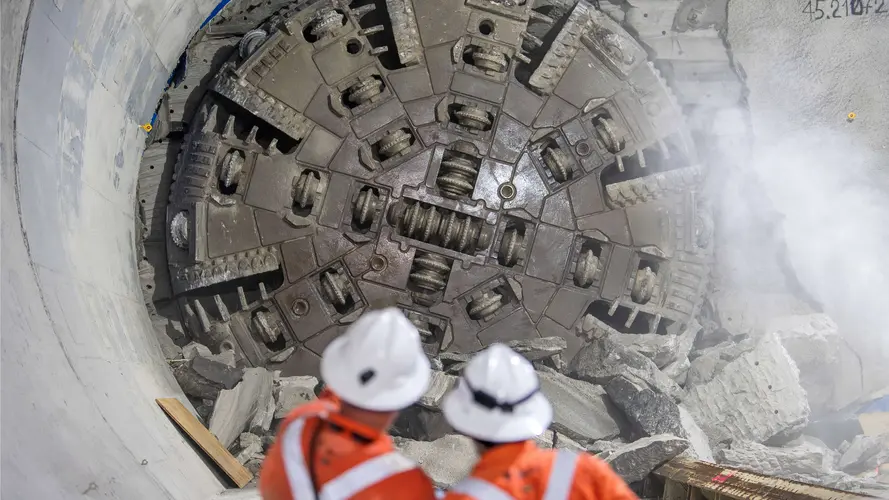
Copyright: https://www.sydneymetro.info
1. Alignment Tolerances: Millimetres That Carry Millions
On underground rail projects, survey control underpins:
- Tunnel boring machine guidance
- Track alignment
- Platform edge positioning
- Structural penetration set-out
- Settlement monitoring
A deviation of even a few millimetres can result in:
- Rework costs
- Delay claims
- Contractual disputes
- Professional indemnity allegations
When alignment issues arise, survey data becomes central evidence. Claims rarely focus solely on whether the measurement was technically correct, they assess:
- Was the control network independently verified?
- Were revisions documented and signed off?
- Were coordinate transformations validated?
- Was the correct drawing version used?
This is where internal QA systems become as important as field accuracy.
2. Documentation: Your Strongest Defence in a Claim
In large infrastructure disputes, engineering surveyors are often required to defend work months or years after delivery.
Common claim triggers include:
- Alleged misalignment between design and constructed elements
- Discrepancies between subcontractor data and principal contractor expectations
- Claims of inadequate monitoring records
Contemporaneous documentation is often decisive in resolving disputes efficiently.
Key protective practices include:
- Certified set-out reports
- Version-controlled drawing logs
- Clear communication trails
- Independent check procedures
- Signed variation confirmations
If a matter escalates, early engagement with your insurer’s Claims Support Team can significantly reduce escalation risk. Firms should understand how their policy responds before a dispute arises.
3. Contractual Complexity in Mega Projects
Sydney Metro involved:
- Tier 1 contractors
- Design and construct contracts
- Joint ventures
- Subcontracted survey scopes
Engineering surveyors often sign agreements that include:
- Broad indemnity clauses
- “Fitness for purpose” obligations
- Proportionate liability exclusions
- Expanded consequential loss exposure
Many survey firms underestimate how contractual terms can expand liability beyond what standard professional indemnity policies automatically cover.
Before entering large infrastructure contracts, firms should review:
- Liability caps
- Indemnity extensions
- Contractual assumption of design responsibility
- Notification requirements
Firms operating within the Professional Standards Scheme (PSS) benefit from statutory liability limitation frameworks that can materially reduce financial exposure.
(View more details here: Professional Standards Scheme (PSS) for Surveyors)
4. Monitoring & Public Scrutiny
Urban tunnelling projects often draw intense public attention.
When nearby property owners allege damage, engineering surveyors may be asked to:
- Provide historical monitoring data
- Defend instrument calibration
- Justify control methodology
- Explain movement interpretation
Even when tolerances were maintained, defending allegations consumes time, resources and management attention.
A robust Professional Indemnity policy designed specifically for surveying practices ensures:
- Technical claims understanding
- Legal representation experienced in surveying disputes
- Support during expert evidence processes
(Read more here: Professional Indemnity Insurance for Surveyors)
5. Technology Risk in Digital Infrastructure Environments
Modern tunnel infrastructure relies heavily on:
- BIM integration
- Digital model exchange
- Cloud-based collaboration platforms
- Remote control verification
While digital tools improve efficiency, they introduce new exposures:
- Uploading outdated models
- Incorrect coordinate system transformations
- File corruption
- Miscommunication of revision updates
Firms should implement:
- Structured digital version control
- Model validation checklists
- Controlled data transfer protocols
- Staff training aligned with evolving digital risk
Regular participation in sector-specific Risk Management Training ensures internal systems evolve alongside project complexity.
(Read more: Risk Management Training for Surveyors)
6. Early Notification: A Critical Risk Strategy
Many survey firms hesitate to notify insurers early when disputes appear minor.
However, on mega infrastructure projects, minor issues can escalate rapidly.
Early notification allows:
- Strategic claims management
- Early legal guidance
- Cost containment
- Reputation protection
Firms insured under sector-specific arrangements benefit from insurers who understand the nuances of infrastructure surveying disputes.
Conclusion: Infrastructure Growth Requires Risk Evolution
Sydney Metro demonstrates the evolving risk landscape engineering surveyors now operate within:
- Higher project values
- Greater scrutiny
- More complex contracts
- Increased digital integration
Precision in the field must now be matched by:
- Precision in documentation
- Precision in contractual understanding
- Precision in insurance alignment
Survey firms delivering infrastructure work should review their:
- Professional Indemnity structure
- PSS participation
- Claims response procedures
- Risk training programs
Infrastructure will continue to scale. Your protection must scale with it. If your surveying firm wants to be protected with an insurance partner who understands the industry, now is the time to review your cover and make sure it’s built for the risks you’re actually facing. Get in touch with us here.